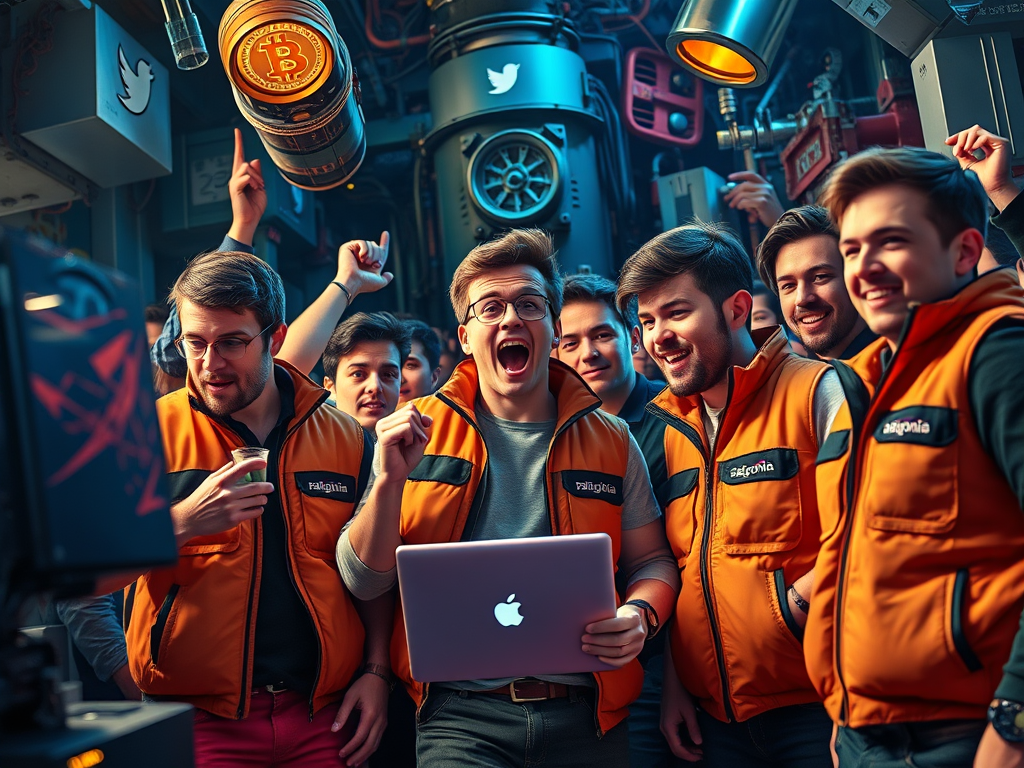
Imagine handing your country’s most complex infrastructure challenges to a group of guys who think “filing taxes” is an optional side quest. That’s the DOGE task force: a bunch of Red Bull-fueled 20-somethings, personally selected by Elon Musk, now tasked with “fixing” the U.S. government.
They’re not engineers. They’re chaos agents in Patagonia vests—armed with GitHub accounts, TED Talk confidence, and the institutional memory of a goldfish.
The DOGE bros: Where bravado meets basic errors
These aren’t prodigies. They’re LinkedIn influencers with root access. Plucked from the Musk cinematic universe—SpaceX, Tesla, maybe that one failed crypto side hustle—they’re now stomping around federal agencies with the subtlety of a frat party in a library.
They’re allergic to nuance, documentation, or the possibility that someone older might know more than them. Their idea of modernization is rewriting systems they don’t understand in languages they just learned, breaking critical functionality, then tweeting about it like they just cured digital cancer.
If someone over 40 tries to intervene, they’re dismissed as out of touch—because in bro-land, actual experience is seen as bloatware.
Tech’s talent myth is finally falling apart
Let’s get brutally honest: the DOGE bros aren’t proof of a meritocracy. They’re proof that charisma and confidence can still beat competence and context—at least long enough to land a headline and a speaking slot at Web Summit.
We’ve been sold this fantasy of the brilliant young disruptor for so long, we forgot to ask: are they actually any good? Because right now, we’ve got a front-row seat to what happens when you confuse fast talk for deep thinking and side projects for systems engineering.
Spoiler: systems fail.
They’re not 10x engineers. They’re 0.5x with great personal branding and a safety net of hype. When things go sideways—and they do—they don’t fix it. They spin it. Because in this world, failing up is the only real deliverable.
Ageism isn’t just toxic—it’s operational malpractice
This isn’t just an HR issue. It’s a performance issue. DOGE isn’t optimizing government—it’s running a live demo on how not to manage critical systems.
They’ve sidelined people who’ve spent decades in the trenches, understanding the nuance, dependencies, and real-world consequences of change. Why? Because they don’t look good on a pitch deck.
We’re watching seasoned professionals get shoved out of the room so that some dude who peaked during the YC accelerator can take apart federal infrastructure like it’s a weekend hackathon. Only this time, there’s no devpost. Just service outages and “oops” emails.
This isn’t innovation. It’s cosplay with a budget
DOGE is Silicon Valley’s worst traits distilled: youth worship, ego over empathy, vibes over validation. They’re not building the future. They’re LARPing as heroes in a system they barely understand, powered by the belief that if you talk fast enough, no one will notice you have no idea what you’re doing.
And the scariest part? They truly believe they’re saving us. They believe it while pushing untested code, blowing up budgets, and tweeting from inside the command line.
The bottom line
DOGE isn’t a revolution. It’s a TED Talk in slow motion, bloated with ego and backed by hype, quietly dismantling the systems that actual professionals spent their careers holding together.
So no, the kids are not alright. They’re just the loudest ones in the room—and the rest of us are footing the bill for their crash course in reality.
Got a favorite DOGE-style disaster? A time someone too green got the wheel and drove the whole thing off a cliff? Share it. Let’s put some receipts on the record.
 Will Kelly